

Major depression is more than a low mood — and it responds to treatment.
When sadness, emptiness or exhaustion lingers for weeks and starts to shape your days, it may be major depressive disorder. It’s common, it’s real, and it’s treatable.

What is Major Depressive Disorder?
Major depressive disorder (MDD) is a medical condition marked by a persistently low mood or loss of interest that lasts at least two weeks and interferes with how you work, sleep, eat and relate to others. It is not the same as ordinary sadness, and it is not something you can simply “snap out of.”
Depression involves real changes in brain chemistry and function. That’s also why it responds to treatment — often very well, even when the first approach hasn’t worked.
You may be experiencing major depression if, for two weeks or more, you’ve noticed:
Emotional
- Persistent sadness, emptiness or hopelessness
- Loss of interest or pleasure in almost everything
- Feelings of worthlessness or excessive guilt
Behavioral
- Pulling away from work, friends and activities
- Trouble concentrating, remembering or deciding
- Sleeping far more or far less than usual
Physical
- Fatigue and low energy most days
- Appetite or weight changes
- Feeling physically slowed down or agitated
In crisis? If you’re having thoughts of suicide or self-harm, help is available right now. Call or text 988 to reach the Suicide & Crisis Lifeline, any time, day or night.
How it’s diagnosed at Wave
There’s no blood test for depression. Diagnosis comes from a careful clinical evaluation — reviewing your symptoms, how long they’ve lasted, your medical and family history, and ruling out other causes such as thyroid problems or medication side effects.
At Wave, that evaluation is done by a physician. Where helpful, we use validated rating scales to measure severity and genetic testing to inform medication choices — so we can match you with an effective treatment sooner.
Most people with depression get better with the right plan. Wave offers the full range:
Every plan is individualized — you’ll feel seen, not processed.
Medication Management
Careful prescribing, ongoing monitoring and genetic testing to match you with the right medication at the right dose.
TMS Therapy
Non-invasive magnetic stimulation — FDA-approved for depression and OCD — with no medication and no downtime.
Ketamine & Spravato
FDA-approved Spravato (esketamine) and ketamine for treatment-resistant depression, under close medical monitoring.
Supportive Psychotherapy
Talk-based support integrated with your medical care, focused on coping skills and steady, measurable progress.
Interventional Psychiatry
Advanced, procedure-based care — TMS, Spravato and ketamine — for symptoms that medication alone hasn’t resolved.
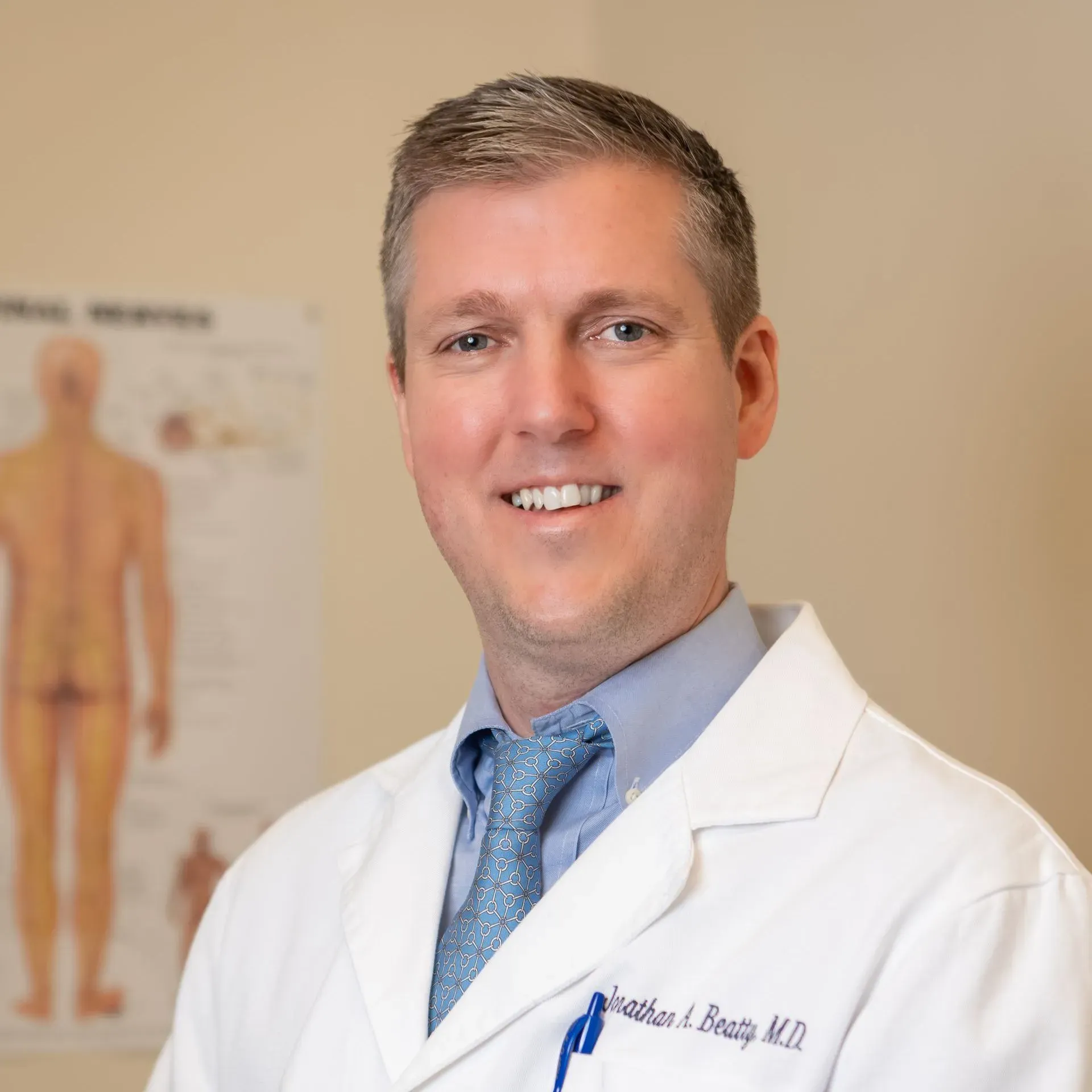
Care led by a triple board-certified physician
Wave Treatment Centers is led by Dr. Jonathan Beatty, a triple board-certified physician in psychiatry & neurology, addiction medicine and pain medicine, and a Fellow of the American Psychiatric Association. With more than 18 years of experience, he treats the cases other practices send onward — including complex and treatment-resistant presentations.
Because Wave combines everyday psychiatric care with advanced, interventional options under one roof, your plan can evolve as you do — from medication management to TMS, Spravato or ketamine — without starting over with a new provider.
Meet Dr. BeattyYour first appointment
Your first visit is a thorough evaluation. You’ll find a welcoming environment where our highly trained staff work to understand your history, your symptoms, and what you’re hoping to change.
While an evaluation is not a guarantee of a prescription, if medication is deemed appropriate, we’ll work closely with you to ensure you understand the risks and benefits. Together we’ll outline a personalized plan and the next steps that fit your life.
Most new patients are seen within one to two weeks — and care is available both in person and through secure, HIPAA-compliant telemedicine across Pennsylvania, Florida and New Jersey.
Major Depressive Disorder FAQ
Is depression curable?
Depression is highly treatable, and many people achieve full remission, meaning a significant reduction or complete resolution of symptoms.
For some individuals, depression may occur as a single episode, while others may experience recurring or long-term symptoms that require ongoing management.
With appropriate treatment, meaningful and sustained improvement is a realistic goal.
Do I have to take antidepressants?
Medication is one effective treatment option for depression, but it is not the only approach.
Treatment may also include psychotherapy, lifestyle interventions, and interventional treatments such as TMS or Spravato®, depending on clinical needs.
We work with each patient to develop a personalized treatment plan based on symptoms, history, and treatment goals.
How long does treatment take to work?
Response time varies depending on the treatment approach.
Antidepressant medications typically require several weeks to demonstrate full effect. TMS is delivered over a multi-week course, while interventional treatments such as Spravato® or ketamine-based therapies may produce improvement more rapidly in some patients.
Treatment is closely monitored and adjusted based on individual response.
Can depression come back after treatment?
Yes. Some individuals experience a single episode of depression, while others may have recurring symptoms over time. Ongoing treatment, lifestyle changes, and early intervention can help reduce the risk of relapse.
What is the difference between depression and feeling sad?
Sadness is a normal emotional response to life events. Depression is a medical condition that involves persistent symptoms such as low mood, loss of interest, changes in sleep or appetite, low energy, difficulty concentrating, and impaired functioning.
When should I seek professional help for depression?
You should consider seeking professional evaluation if symptoms last more than a few weeks, interfere with daily life, affect relationships or work performance, or if previous treatments have not provided sufficient relief.
Ready when you are.
Reaching out takes courage. Your conversation with us is confidential, compassionate, and pressure-free — schedule whenever you’re ready.