

OCD is more than being tidy — and it responds to treatment.
Intrusive thoughts and the compulsions meant to quiet them can take over your life. OCD is treatable, including with FDA-approved TMS.

What is Obsessive-Compulsive Disorder?
Obsessive-compulsive disorder (OCD) is a condition in which unwanted, intrusive thoughts, images or urges (obsessions) drive repetitive behaviors or mental acts (compulsions) meant to relieve the distress. The relief is temporary, so the cycle repeats — and can consume hours of a person’s day.
OCD has little to do with being neat. It’s a treatable, brain-based condition, and Wave offers advanced options including TMS, which is FDA-approved specifically for OCD.
OCD involves a cycle of obsessions and compulsions. Common examples include:
Obsessions
- Fears of contamination or germs
- Intrusive taboo or distressing thoughts
- Need for symmetry, order or “just right” feelings
Compulsions
- Excessive washing, checking or counting
- Repeating actions or mental rituals
- Seeking reassurance over and over
Impact
- Hours lost to rituals each day
- Avoiding triggers and situations
- Shame and distress about the thoughts
How it’s diagnosed at Wave
Diagnosis involves identifying the obsession–compulsion cycle and distinguishing OCD from generalized anxiety and other conditions. Many people feel ashamed of their intrusive thoughts and have hidden symptoms for years — our evaluation is judgment-free and built to bring relief.
We also assess for co-occurring depression and anxiety, which frequently accompany OCD.
OCD is treatable, including for cases that haven’t responded to medication. Wave offers:
Every plan is individualized — you’ll feel seen, not processed.
TMS Therapy
Non-invasive magnetic stimulation — FDA-approved for depression and OCD — with no medication and no downtime.
Medication Management
Careful prescribing, ongoing monitoring and genetic testing to match you with the right medication at the right dose.
Supportive Psychotherapy
Talk-based support integrated with your medical care, focused on coping skills and steady, measurable progress.
Interventional Psychiatry
Advanced, procedure-based care — TMS, Spravato and ketamine — for symptoms that medication alone hasn’t resolved.
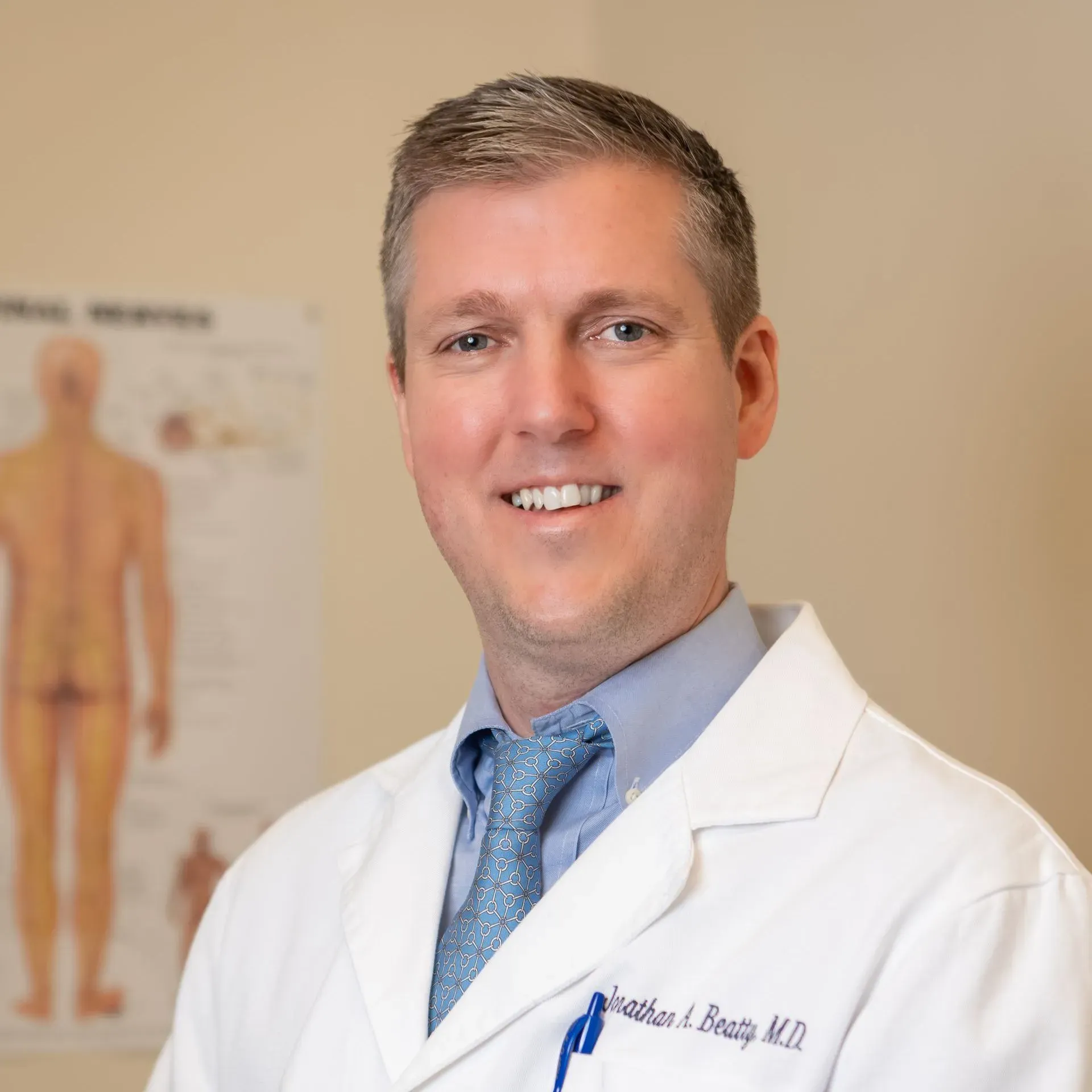
Care led by a triple board-certified physician
Wave Treatment Centers is led by Dr. Jonathan Beatty, a triple board-certified physician in psychiatry & neurology, addiction medicine and pain medicine, and a Fellow of the American Psychiatric Association. With more than 18 years of experience, he treats the cases other practices send onward — including complex and treatment-resistant presentations.
Because Wave combines everyday psychiatric care with advanced, interventional options under one roof, your plan can evolve as you do — from medication management to TMS, Spravato or ketamine — without starting over with a new provider.
Meet Dr. BeattyYour first appointment
Your first visit is a thorough evaluation. You’ll find a welcoming environment where our highly trained staff work to understand your history, your symptoms, and what you’re hoping to change.
While an evaluation is not a guarantee of a prescription, if medication is deemed appropriate, we’ll work closely with you to ensure you understand the risks and benefits. Together we’ll outline a personalized plan and the next steps that fit your life.
Most new patients are seen within one to two weeks — and care is available both in person and through secure, HIPAA-compliant telemedicine across Pennsylvania, Florida and New Jersey.
Obsessive-Compulsive Disorder FAQ
How do I know if I have OCD?
OCD involves recurring obsessions (unwanted thoughts, images, or urges) and compulsions (repetitive behaviors or mental rituals performed to reduce anxiety).
Many people assume OCD only involves excessive cleaning or checking, but symptoms can take many forms. A comprehensive psychiatric evaluation can help determine whether OCD is contributing to your symptoms.
What is the difference between OCD and anxiety?
While OCD is classified as a related anxiety disorder, it involves a specific cycle of obsessions and compulsions.
Many people with OCD recognize that their fears are excessive or irrational but feel unable to stop the thoughts or behaviors without treatment.
Are intrusive thoughts dangerous?
Intrusive thoughts are a common symptom of OCD and are not a reflection of a person’s character, intentions, or likelihood of acting on them.
Although these thoughts can be distressing, they are typically unwanted and ego-dystonic. Effective treatment can help reduce their frequency, intensity, and impact on daily life.
Is OCD curable?
OCD is a chronic condition, but it is highly treatable. With appropriate treatment, many people experience substantial symptom reduction and significant improvements in quality of life.
Treatment goals include reducing the frequency and intensity of obsessions and compulsions, improving daily functioning, and helping patients regain time and freedom from OCD symptoms.
Do you offer specialized TMS treatment for OCD?
Yes. Wave Treatment Centers provides the FDA-cleared TMS protocol for OCD using a dedicated treatment coil designed specifically for OCD treatment.
Because the brain regions targeted for OCD differ from those used in depression treatment, specialized equipment and treatment protocols are required. Following a comprehensive evaluation, we can determine whether OCD-focused TMS may be appropriate for your symptoms and treatment goals.
How does TMS help OCD?
TMS is FDA-cleared for the treatment of obsessive-compulsive disorder (OCD). It uses targeted magnetic stimulation to modulate the brain circuits involved in obsessive thoughts and compulsive behaviors.
At Wave Treatment Centers, we offer a dedicated OCD TMS protocol using specialized equipment designed specifically for OCD treatment. For patients whose symptoms have not improved sufficiently with medication, psychotherapy, or a combination of approaches, TMS may provide an effective, non-invasive treatment option without sedation or downtime.
Will I need medication?
Medication is often an important part of OCD treatment, particularly for moderate to severe symptoms. In many cases, effective treatment requires medication doses that differ from those commonly used for depression or anxiety disorders.
Treatment may include medication, psychotherapy, TMS, or a combination of approaches based on individual needs and treatment response.
What if medication or therapy hasn’t worked?
Many individuals with OCD continue to experience significant symptoms despite medication, psychotherapy, or both.
For these patients, additional options may include medication optimization, advanced psychopharmacology, and OCD-focused TMS. A comprehensive evaluation can help determine which treatment strategies may be most appropriate based on symptom severity, prior treatment response, and treatment goals.
Is TMS covered by insurance for OCD?
Coverage for TMS treatment of OCD varies by insurance plan and medical necessity criteria.
Wave Treatment Centers is a private, fee-for-service practice and does not participate in insurance networks. Patients pay the practice directly at the time of service. Those with PPO plans that include out-of-network benefits may be eligible for partial reimbursement, and we assist with claim submission whenever possible.
Ready when you are.
Reaching out takes courage. Your conversation with us is confidential, compassionate, and pressure-free — schedule whenever you’re ready.